
It usually starts small. One corner of the sofa starts to fray. A specific rug edge becomes a target every morning around 7. The window gets claimed at 3pm sharp, every day, like there's a meeting. Over a few months, these patterns quietly become the actual blueprint of how the space gets used — not the one you drew in your head when you moved in.
The strange part is that most cat products are designed to be hidden.
The scratcher gets shoved behind a chair. The mat gets banished to the laundry room. The bed ends up in a corner that photographs well but that the cat completely ignores. The room looks tidier for a week. Then the cat goes right back to the sofa edge.
Start Where Your Cat Already Is
Cats are honest about space in a way people aren't. They tell you exactly what they want by where they keep going. The scratching spot near the hallway means there's a path they use constantly. The window perch means that sunbeam hits at the right angle. The rug corner getting destroyed every morning isn't random — something about that texture is doing it for them.
So before buying another object, watch for a week. Most of the work is already done.
If your cat scratches the sofa, the move isn't to put a scratcher across the room and hope. It's to put a better surface where the habit already lives. If the window is the resting spot, that area wants to become a real zone, not an accident.
Pick Cat Furniture You Don't Want to Hide
Most people don't actually mind cat furniture in their home. What they mind is the look of it — the loud colors, the carpet-on-cardboard feel, the sense that this object is temporary and embarrassing and unrelated to anything else they own.
That's a material problem more than a category problem.
A scratcher doesn't have to look like a toy. When the form is quieter and the material is closer to what's already in the room — wood, sisal, wool, linen — the object stops competing. It just sits there, doing its job, looking like it was chosen on purpose. Which it was.
 04
04
 01
01
A scratcher that looks chosen, not tolerated.
Build a Cat-Friendly Zone, Not a Scatter
Cat stuff feels chaotic when every need gets solved in a different corner. Scratcher by the door, toys under the console, cushion across the room, food mat in the kitchen. Each thing is fine alone. Together they make the apartment feel like a pet store.
The fix is boring and it works: pick one or two areas and put everything related there.
A scratch surface in the spot they already use. A soft place to land next to it. Toys in the same visual zone. Now it's a setup, not a scatter. In a small apartment this matters more, not less — you can't afford five pet zones, but you can do one well.
 05 · styled corner
Everything in one considered corner — a setup, not a scatter.
Texture Does More Than Color
Color gets all the attention in interior advice, but texture is doing more of the work, especially with animals in the picture. Cats care about texture. Rooms care about texture. The two things actually agree more often than people assume.
Sisal, woven surfaces, matte wood, wool, anything with a hand to it — these settle into a room. Glossy plastic doesn't. A rug-like scratcher reads as a textile, which the room already knows what to do with. A plastic arch reads as an appliance, which it doesn't.
 03
03
 06
06
Texture the room already knows what to do with.
Don't Erase Your Cat From the Room
There's a difference between a beautiful home and a home pretending nobody lives there.
A cat-friendly space shouldn't feel sterile. It should look lived in by the specific animal who lives in it. The scratcher belongs in the living room. The perch belongs by the window. The cushion belongs where they actually nap, not where it would look best on Instagram.
Your cat doesn't need to be tucked away. They need a place that was thought about. When that place exists, the whole room gets calmer — for them and for you.
Read more
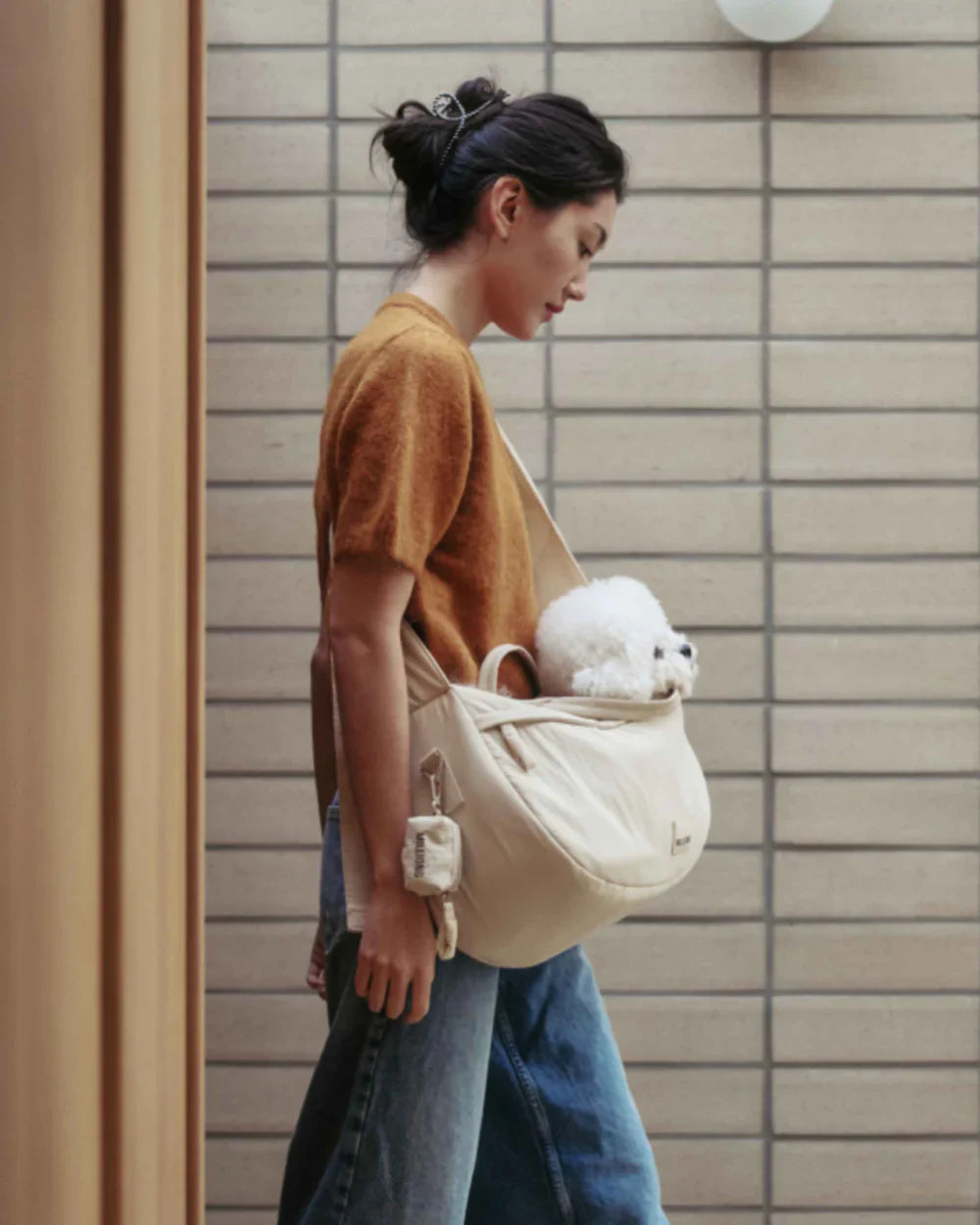
What to bring on a dog walk — a look inside our walk bag: treats within reach, water that travels, and one bag that carries it all.
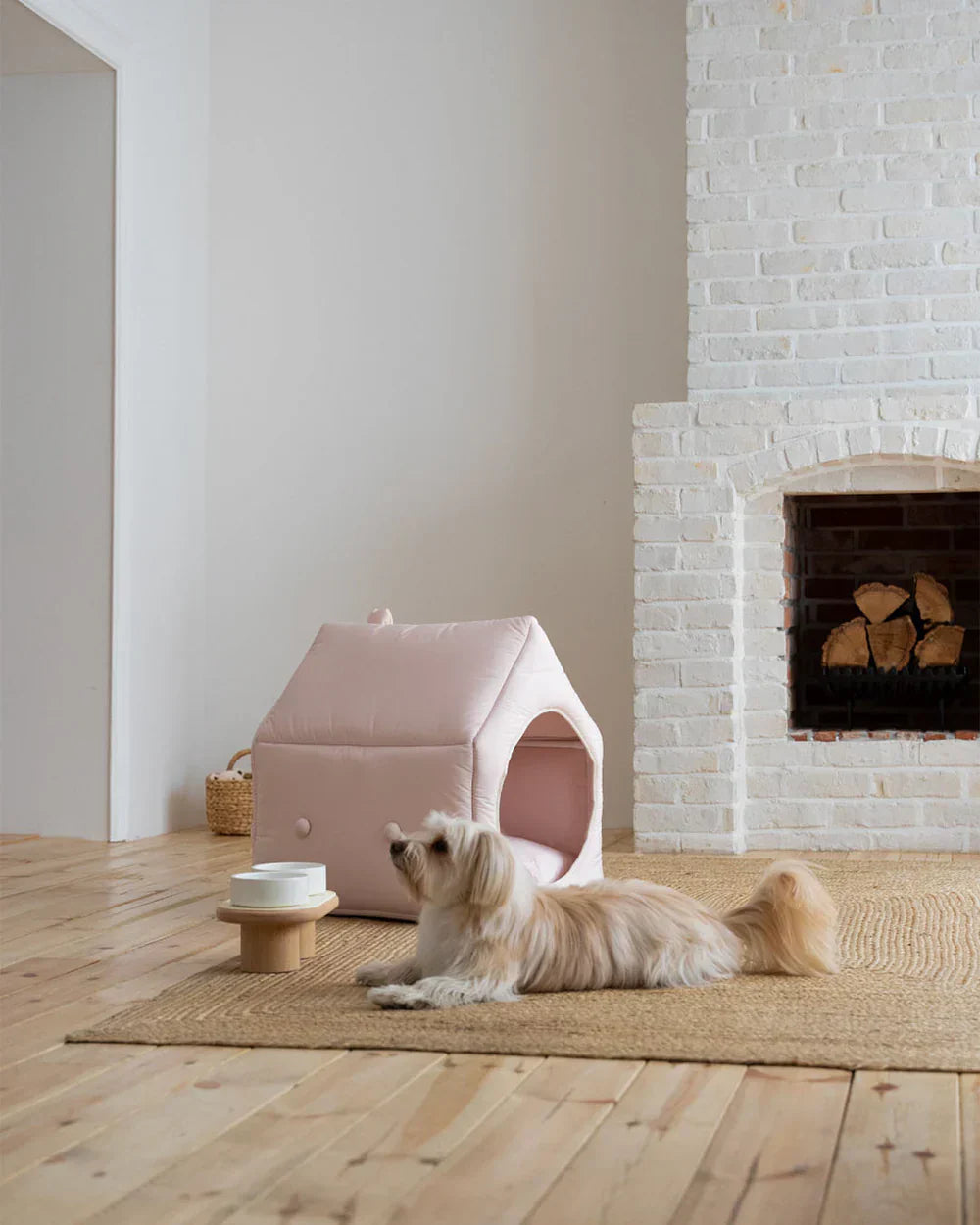
Indoor marking is almost always trainable. Here's the simple routine that stops it — plus four thoughtfully made products that make clean-up, management, calm, and reward easier.