
There is a quiet assumption that a beautiful, minimal home and a happy pet can't share the same room. That you either get the calm, considered space you wanted, or you accept a living room slowly taken over by plastic, primary colors, and gear you'd rather not see.
Japandi is the style that quietly proves otherwise. It blends Japanese minimalism with Scandinavian warmth — natural materials, muted tones, low functional furniture, and room to breathe. None of that is at odds with living alongside a dog or cat. If anything, the principles that make Japandi feel calm are the same ones that make a home easier to share with an animal.
Here's how to build one, from the materials up — including the furniture brands quietly making pet-friendly performance pieces, and where your pet's own things fit into the picture.

What Japandi Is, and Why It Suits Pet Homes
Japandi sits at the meeting point of two design traditions that already agree on a lot: the spare, intentional calm of Japanese interiors and the warm, woody comfort of Scandinavian ones. In practice that means a tight, natural material palette, soft neutral colors, furniture that stays low and useful, and a deliberate amount of empty space.
Those same instincts happen to be pet instincts. A clutter-free floor is easier to keep clean. Natural, textured surfaces wear in gracefully instead of looking damaged. And a calm room, with fewer competing objects, tends to feel calmer for the animal living in it too.
Oak, linen, wool, rattan. They bring warmth, age well, and quietly forgive the wear that comes with a pet.
Muted, tonal colors keep a room serene — and the right mid-tone hides pet hair far better than stark white or black.
Negative space is the whole point. Fewer, better pieces mean less clutter for both you and your pet to navigate.
Start With Materials, Not More Stuff
The fastest way to a Japandi home that survives a pet isn't buying more — it's choosing the right surfaces once. Two things matter most: the materials you can see, and the fabric you can't easily replace.
For the look, lean on natural textures — matte wood, woven rugs, linen, wool. They settle into a room and take on character rather than looking worn. For the parts that take daily abuse, this is where performance fabric earns its place. Woven tightly and treated to repel moisture, it keeps spills and accidents on the surface instead of letting them soak in, and many versions resist snags from claws. Names like Crypton, Sunbrella, and Revolution are the ones to look for on a spec sheet.
Choose a mid-tone, textured weave over a flat solid, and you get the bonus of camouflage: everyday pet hair and the occasional muddy paw simply read as less.
If you want a place to start, this is the kind of palette that does the work — warm neutrals as the base, one muted natural accent, and a single grounding dark.
The Pieces Worth Building Around
A handful of design-led brands now make the kind of warm, modern pieces Japandi calls for — and back them with fabrics, washable covers, and natural materials made for real life with animals. These are four we'd build a room around.

A Low Japandi Sofa, Built for Spills
Castlery's Mori is about as Japandi as a sofa gets: a low, laid-back profile floating on a timber platform base in natural or walnut wood, feather-filled seats, and a 2026 iF Design Award to show for it. The removable covers come in spill-resistant performance fabric, so the calm look survives real life with a pet.
Visit Castlery →
A Handmade Wood Bed, Built to Last
Medley builds each bed to order from FSC-certified walnut or maple, finished with a low-VOC, water-resistant natural polish. The silhouettes stay low and solid — some with a base that floats just off the floor — which is exactly the warm, grounded minimalism Japandi is after, and the finish holds up to the daily life a pet brings.
Visit Medley →
A Washable Rug You Won't Baby
Re-Jute gives you the natural jute texture Japandi loves without the upkeep. Ruggable's Tillie in Solid Sand has the woven, organic look in a warm, grounding sand tone, but it lies flat and low the way the style wants — and it's fully machine-washable and stain-resistant, so muddy paws and the occasional accident aren't a crisis.
Visit Ruggable →
A Washable Ottoman Your Pet Will Claim
Sabai is the conscious-home pick. Its Essential Ottoman has clean lines and tapered wood legs, with removable, machine-washable slipcovers (the Recycled Velvet is scratch- and stain-resistant for pets; for a more matte, natural Japandi texture, choose the Hemp Blend). Pick a muted tone like oat or cashew, and it doubles as the low perch your pet will claim anyway.
Visit Sabai →Where Your Pet Fits In
Here's the part most homes get backwards: the goal isn't to hide the pet's things, it's to choose pet pieces that belong in the room in the first place. The same rules apply — natural materials, quiet tones, low and intentional forms.
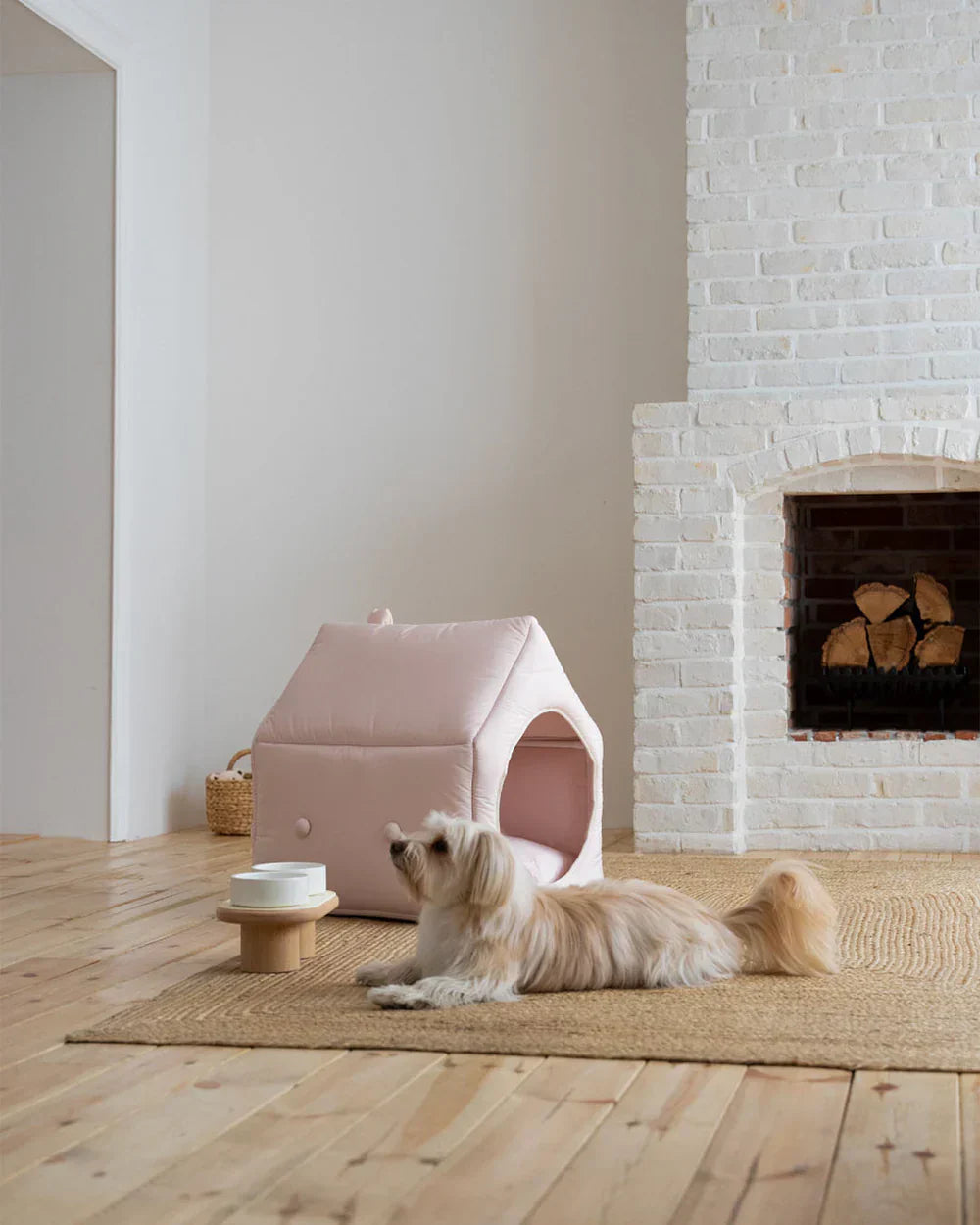
A resting spot is the easiest place to start. The Marron Bed is a good example: an arched cave made from a single piece of natural felt, in soft gray, with a washable cushion. Placed where your pet already naps — beside the sofa, by the window — its felt texture and muted tone let it read as a quiet, sculptural object rather than a pet accessory parked in the corner.
The test is simple: if a guest wouldn't immediately clock it as "pet stuff," it's working.
Keep It Calm: Edit, Don't Add
Japandi is as much about what you remove as what you bring in, and a pet home benefits from the same discipline. Rather than solving every need in a different corner — scratcher by the door, toys under the console, bed across the room — give your pet one considered zone and keep everything there.
The bed where they already settle. A soft throw or mat beside it. Toys in the same visual area. In a small apartment this matters more, not less: you can't spare five pet zones, but you can do one beautifully. The room stays open, the palette stays quiet, and nothing about it says you compromised to live with an animal.
A Japandi home and a pet aren't a trade-off. Choose natural materials, performance fabric, and a quiet palette, pick pet pieces that belong in the room, and edit down to one calm zone. The result feels considered — for you and for them.
Frequently Asked Questions
Japandi blends Japanese minimalism with Scandinavian warmth: natural materials, a muted palette, low and functional furniture, and plenty of negative space. The result is calm and uncluttered, but still soft and livable rather than cold.
Yes. Performance fabrics are tightly woven and treated to resist stains and moisture, so spills and accidents stay on the surface instead of soaking in. Many are also snag-resistant, which helps with claws, and most clean up with simple spot cleaning.
Choose mid-tone, textured upholstery that disguises hair, keep a washable throw on your pet's favorite spot, and edit down to fewer, better pieces so there is less surface for hair and clutter to collect. Regular vacuuming does the rest.
It works especially well. Japandi's restraint suits small spaces, and giving your pet one considered zone instead of scattering gear across the apartment keeps a compact home feeling open and calm.
Read more
Indoor marking is almost always trainable. Here's the simple routine that stops it — plus four thoughtfully made products that make clean-up, management, calm, and reward easier.

A soft, comfortable recovery cone can make healing far less stressful. How to choose between soft and rigid cones, check the fit, and help your dog adjust.