
Most pet owners put real thought into what goes in the bowl, and almost none into how high the bowl sits. But a bowl that is too low means a lot of reaching down at every meal, and one that is too high means stretching up. The right height depends on your pet's size, breed, and age.
Here is how to measure your pet in about a minute, and a simple guide to the right bowl height for dogs and cats of every size.
Floor Bowl or Raised Bowl?
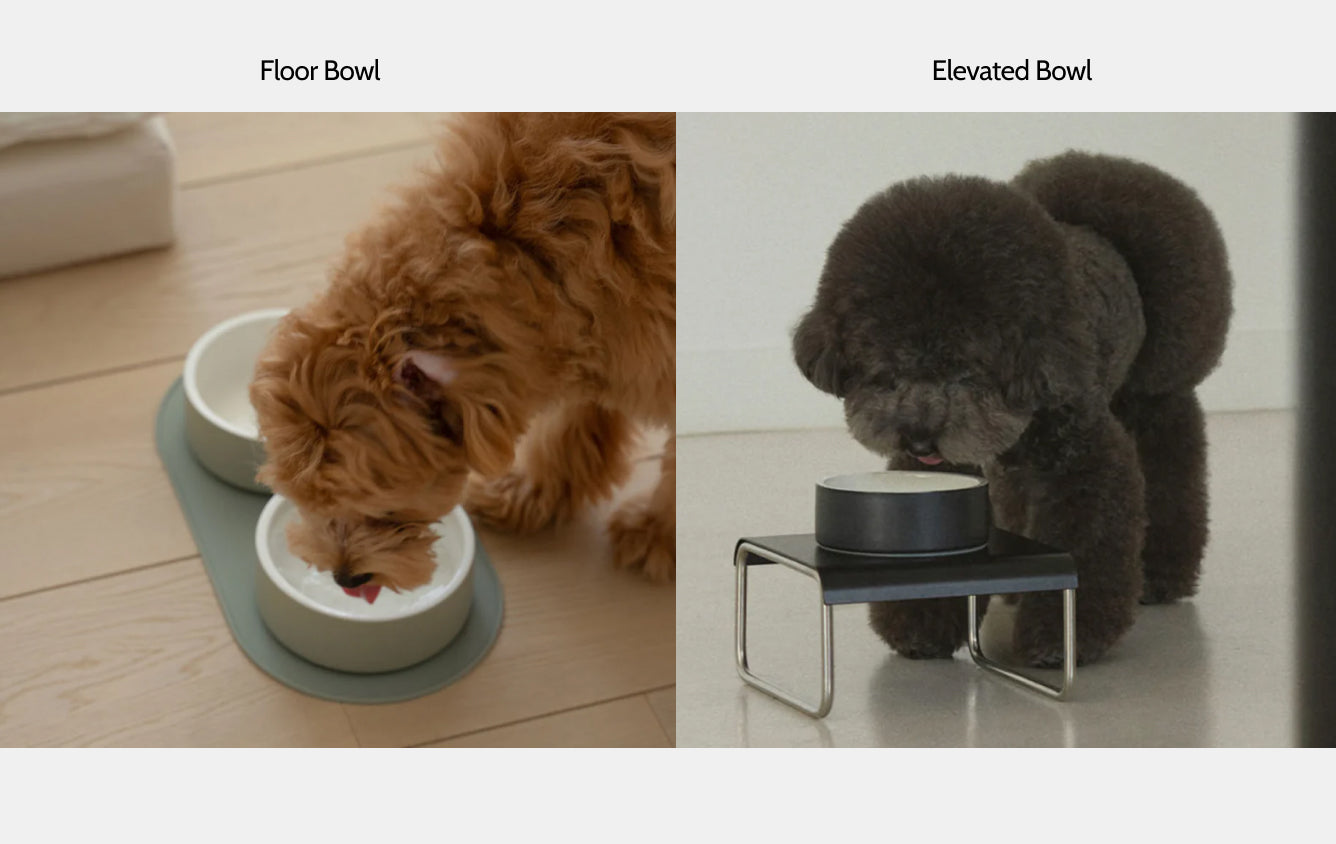
Not every pet needs a raised bowl. A floor bowl is perfectly fine for many pets, while others are noticeably more comfortable with a little lift.
- A floor bowl usually works for: puppies and kittens, toy and small breeds, and young pets with no joint issues.
- A raised bowl usually helps: medium and large adult dogs, senior dogs and cats, and pets with stiff joints, since it cuts down on how far they have to reach.
The goal is never height for its own sake. It is a bowl your pet can reach without bending low or stretching up.
How to Measure Your Pet in One Minute
- Stand them square. Your pet should be standing on all four legs, not sitting or leaning.
- Measure the shoulder. Place a tape measure flat across the top of the shoulder blades (the withers) and read the distance straight down to the floor.
- Do the math. Subtract about 4 to 6 inches. That is roughly where the rim of the bowl should sit.
Cats: aim for roughly 2 to 4 inches off the floor, about level with the front elbows.
Treat the number as a starting point, then watch your pet eat. If they can reach the food comfortably without dipping low or craning up, you have found it.
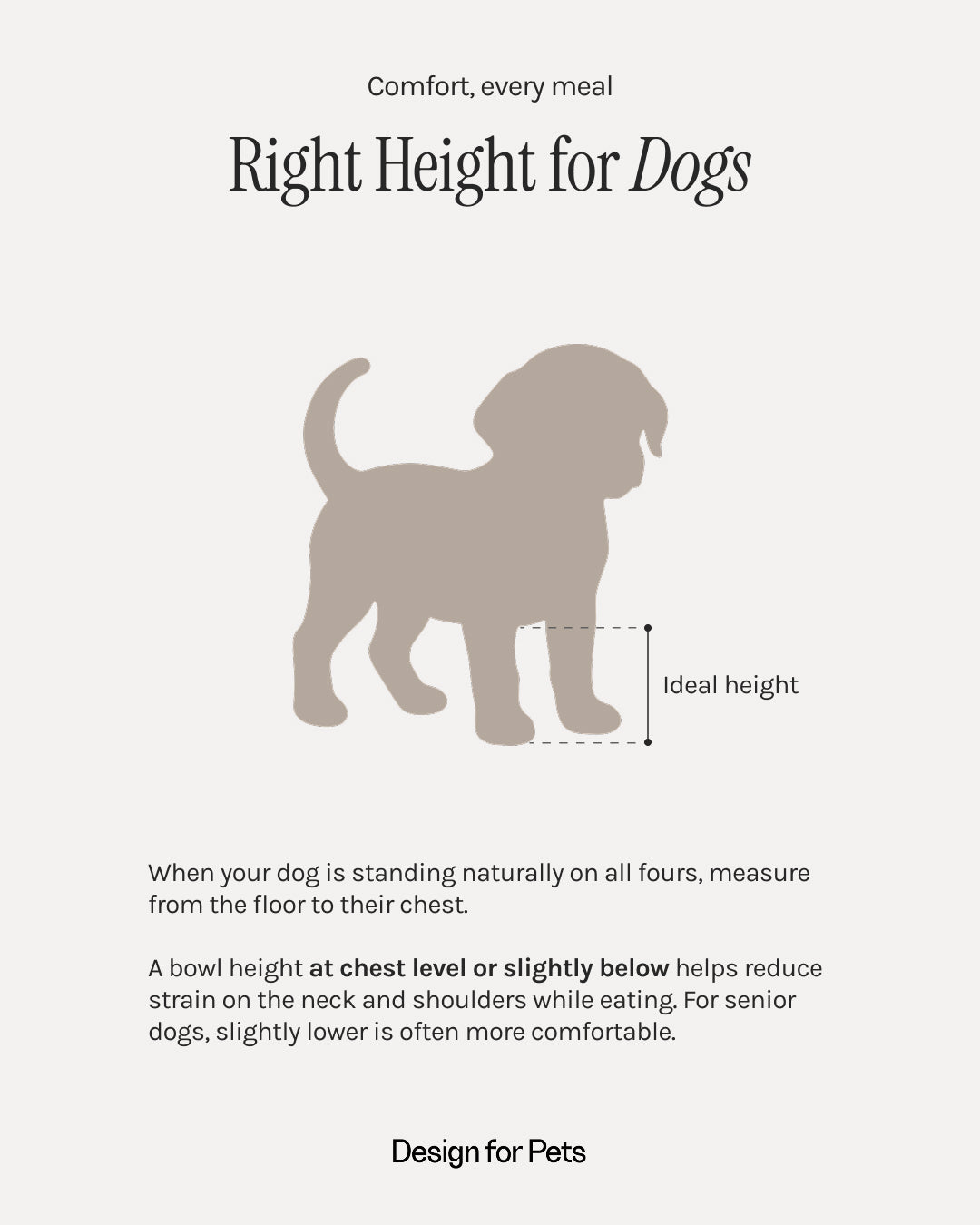

An even quicker check for dogs and cats: with your pet standing naturally on all fours, measure from the floor to the chest. A bowl rim at chest level or slightly below is a comfortable place to start, and senior dogs often prefer it a little lower.
Bowl Height by Size
Here is how those numbers play out across sizes. Find your pet's size band, compare the suggested range with your own measurement, and use our picks as a starting point.
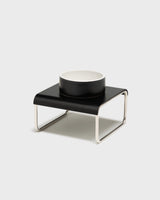
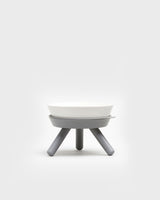
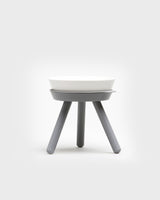

Heights are approximate starting points. Product heights refer to the stand or frame; the bowl rim may sit slightly higher.
Bowl Height by Breed
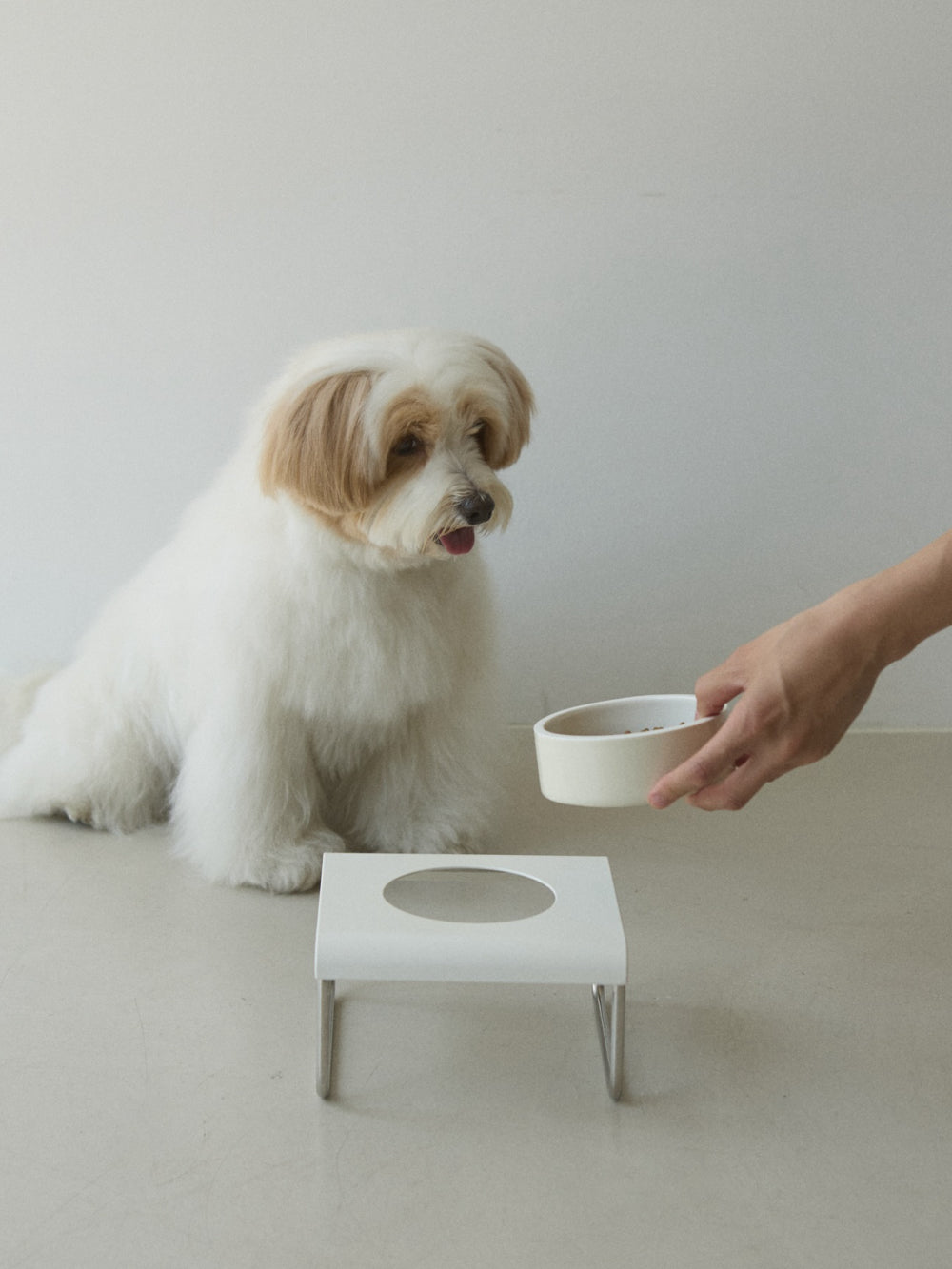
Size gets you most of the way there, but a few breed traits are worth factoring in:
- Flat-faced breeds (Pugs, French Bulldogs, Shih Tzus, Persian cats): a slight lift plus a wide, shallow bowl makes food much easier to reach with a short muzzle.
- Long-eared breeds (Basset Hounds, Cocker Spaniels, Cavaliers): a moderately raised, narrower bowl helps keep ears out of the food and water.
- Tall, leggy breeds (Greyhounds, Whippets, Dobermans): these dogs have the farthest to reach, so height matters most for them, but check the bloat note below if your dog is deep-chested.
- Toy breeds (Chihuahuas, Yorkies, Pomeranians): usually fine at floor level or with just a small lift.
Bowl Height by Age
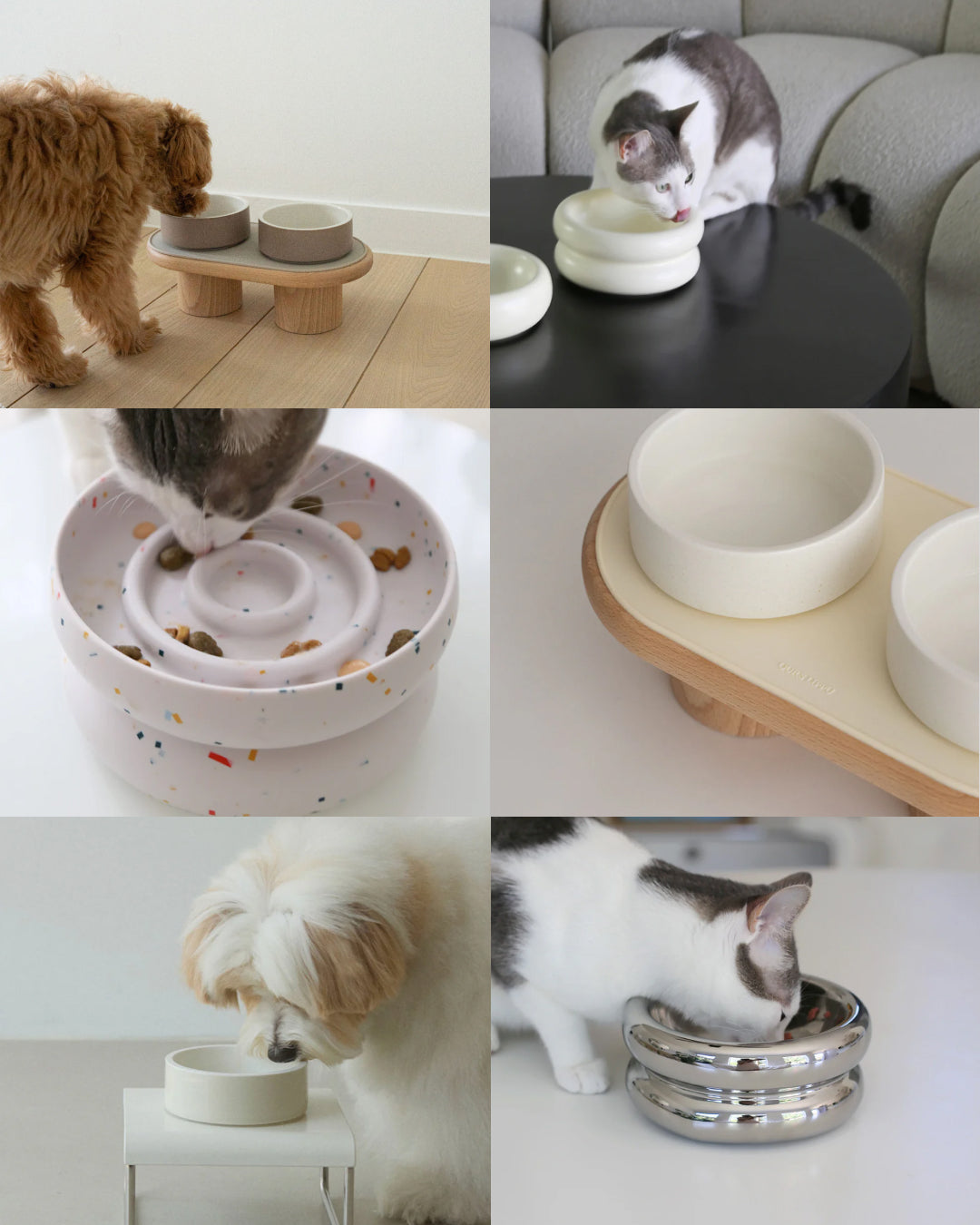
- Puppies and kittens: start at floor level or with a very low lift, and remeasure every couple of months while they are growing.
- Adults: use the shoulder measurement above and stick with it. A healthy adult's ideal height rarely changes.
- Seniors: older pets with stiff joints or arthritis often find a little extra lift makes mealtime noticeably easier. Recheck the height whenever their mobility changes.
Height is only one part of a good feeding setup. For cats especially, the way they stand while eating matters too, which we cover in our guide to how your cat should eat.
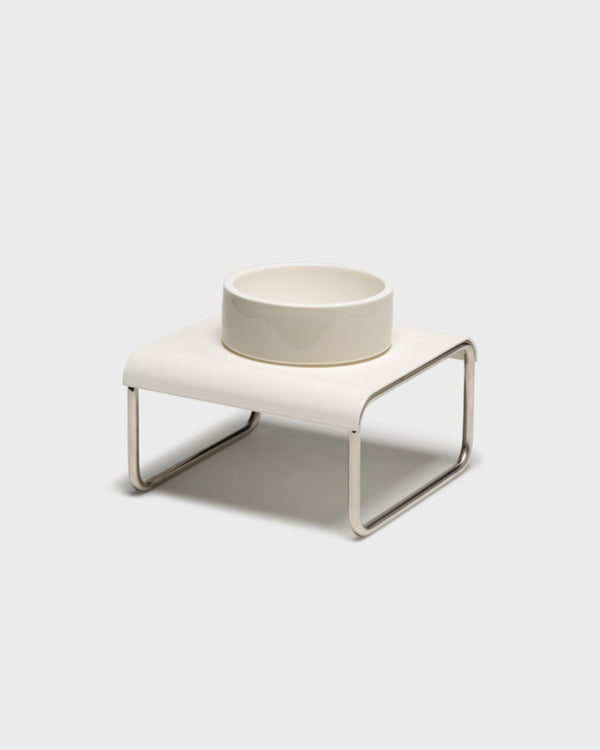
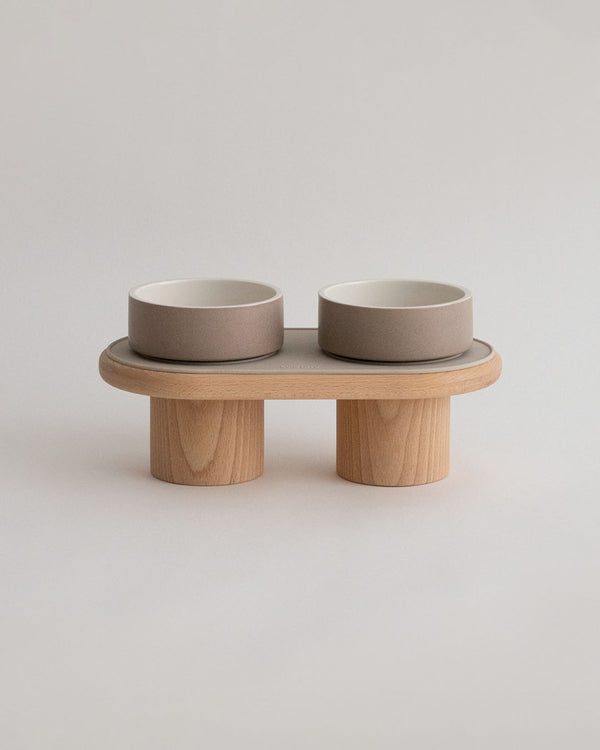
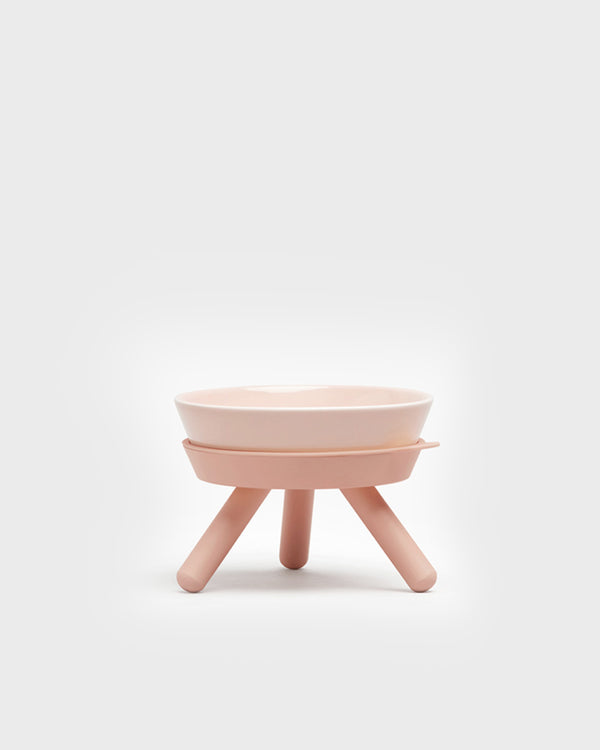
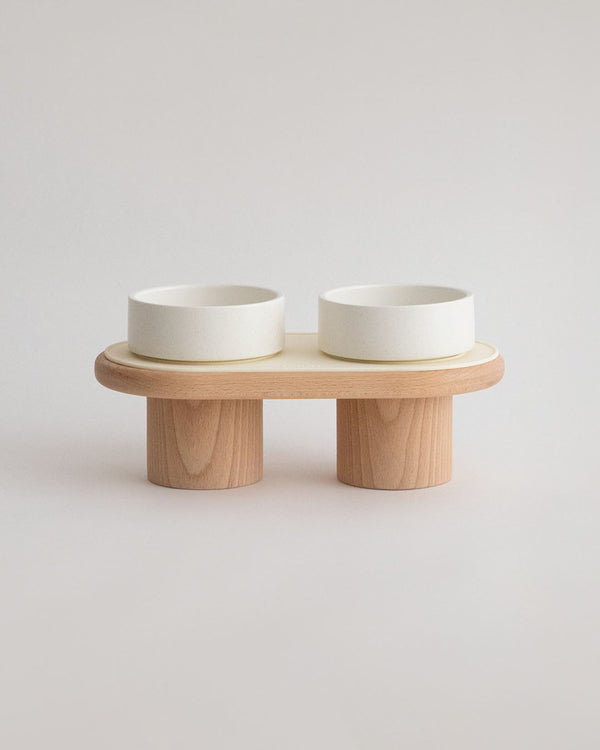
Find the full range of heights in our dining collection.
There is no single perfect bowl height. Measure your pet, start about 4 to 6 inches below the shoulder, and adjust as they grow and age.
Frequently Asked Questions
A good starting point is to set the rim of the bowl about 4 to 6 inches below your dog's shoulder height. For most small dogs that lands around 2 to 6 inches off the floor, medium dogs around 6 to 8 inches, and large dogs around 10 to 12 inches. Adjust from there based on how comfortably your dog reaches the food.
Have your dog stand square on all four legs, then measure straight down from the top of the shoulder blades to the floor. Subtract about 4 to 6 inches from that number, and that is roughly where the rim of the bowl should sit.
Most cats do well with a bowl raised roughly 2 to 4 inches off the floor, about level with their front elbows. A wide, shallow bowl at that height lets them reach the food without dipping their head low.
For most dogs a moderately raised bowl is fine, but large and giant deep-chested breeds are a special case. Research on raised bowls and bloat is mixed, so if your dog is a breed prone to bloat, talk to your vet before raising the bowl. Feeding from the floor is the cautious default for at-risk dogs.