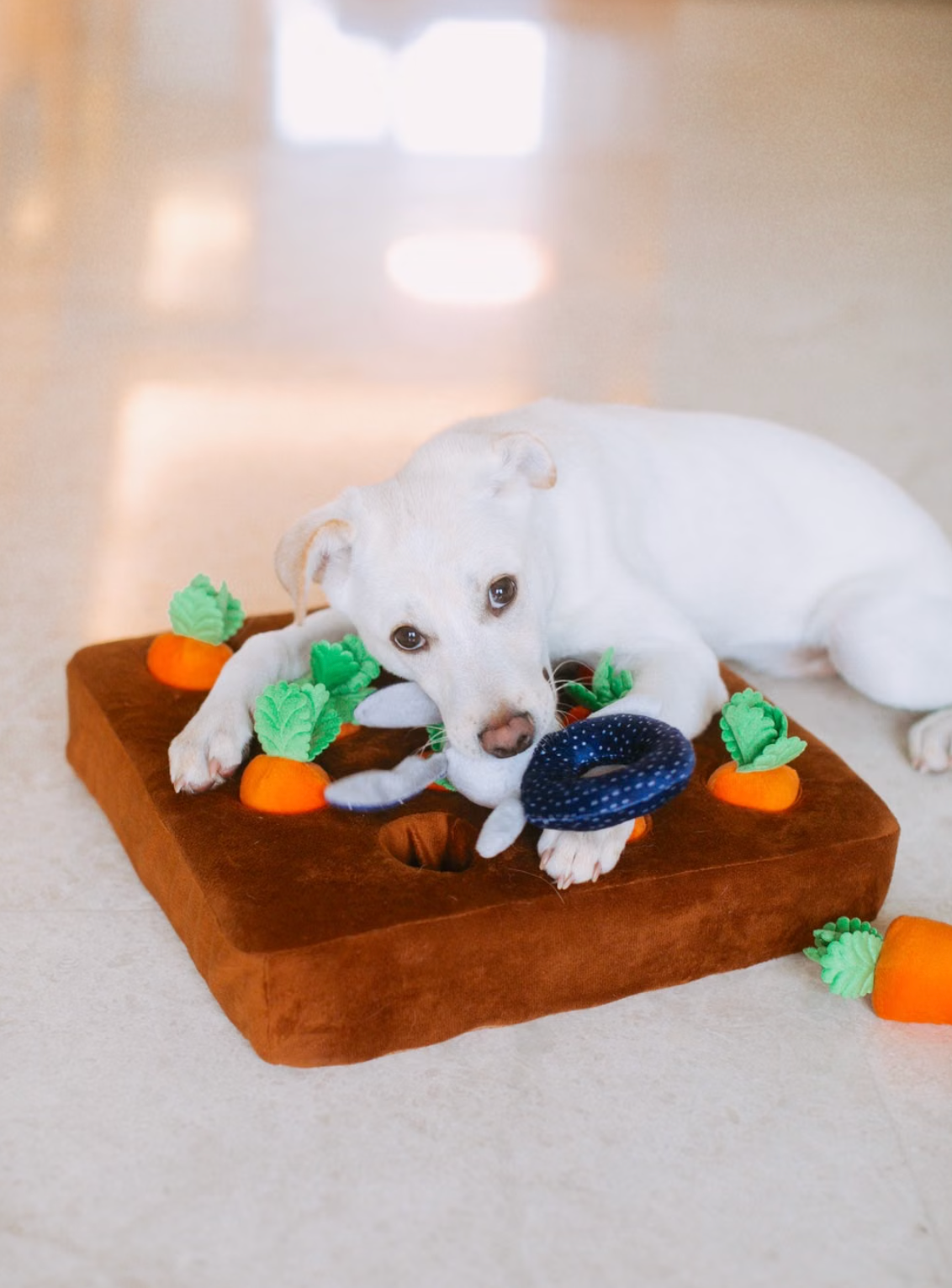
Traveling with your pet goes well or badly long before the engine starts. The calm trips are the ones where the carrier was already familiar, the dog had somewhere secure to sit, the feeding schedule was adjusted, and the room at the other end had a corner that felt like home within the first hour.
This guide walks through that setup in order: the two weeks before, the drive itself, the stops, and the room you arrive in. It is written for car trips with a dog or a cat, and the safety points come from veterinary sources, which are listed at the end.
Start Two Weeks Before You Leave
Most travel stress is not about the trip. It is about the carrier and the car being new on the same day. Veterinary guidance is consistent on this point: take time to help your pet get used to the crate or carrier, and give them chances to get used to car travel before any long trip.1 The ASPCA puts it simply: start with a series of short drives and lengthen them gradually.3
For cats, the carrier should stop being a vet-day object. Cat Friendly Homes suggests leaving it out at home so it becomes part of the room, lining it with a blanket, and putting treats or toys inside so your cat goes in on their own.4 A familiar toy or blanket in the carrier on travel day helps for the same reason.1
Door open, blanket inside, treats appear in it. No trips yet.
Five to ten minutes, ending somewhere good. Repeat every other day.
Food, meds, records, the blanket they have been sleeping on.
A small meal three to four hours before, a walk, then into the carrier or seat.
In the Car: Where Your Pet Rides

The rule from the AVMA is short: cats ride confined in a carrier, and dogs ride restrained.1 An unrestrained pet is a hazard in both directions. A small animal in the footwell can get under the brake or accelerator, a large one across your lap blocks your view, and in a collision an unrestrained pet can be thrown through the windshield or crushed by an airbag.2
What "restrained" means in practice:
- Dogs: a crash-tested harness that works with the seat belt, a secured crate, or a car seat anchored to the vehicle. Keep dogs out of the front seat if the car has airbags, and never on the driver's lap.1 The Garden Car Seat is built for the back seat: a firm shell, two vehicle anchor straps, and a D-ring inside to clip a harness to, so the seat holds the dog and the dog stays in the seat. A seat on its own does not restrain a dog, so clip the harness every time.
- Cats: a carrier large enough to stand, sit, lie down, and turn around in, secured so it cannot slide on a sudden stop.3 A carrier like the Canvas Carry Bag with a reinforced base stays level on the seat; run the seat belt through the handles or strap so it cannot move.
- Both: place a crate near the center of the vehicle rather than against a door, and keep heads inside the windows. Road debris can injure eyes, ears, and noses.2
Feeding, Water, and Stops
A full stomach and a moving car are a bad pairing. The ASPCA recommends a light meal three to four hours before departure and no feeding in a moving vehicle.3 On longer drives, the AVMA suggests small portions of food and water at stops, and planning a stop about every two hours so dogs can move and relieve themselves.1 Cats are the exception: they stay in the carrier at every stop, with water offered through the door, since a car with open doors is the easiest place to lose a cat.
before you leave: a light meal, then a walk
a stop: water, a stretch, a bathroom break for dogs. Cats stay in the carrier
while the car is moving: sips of water at stops only
Bring water rather than relying on what is at the stop. Water from an unfamiliar area can upset some stomachs, so the ASPCA recommends bottled water for the trip.3 Every time a door opens, the collar, tags, and leash should already be on.1 A treat the moment they hop back into the seat keeps the end of each stop from turning into a negotiation, so keep a few clipped to the leash rather than buried in a bag.



Motion Sickness and Nerves
Car sickness is more common in young dogs than adults, likely because the parts of the inner ear that handle balance are not fully developed, and many puppies outgrow it by around one year.5 The signs are easy to miss at first: excessive drooling, yawning, whining, restlessness, then vomiting.6 Fear of the car can add to it, and a dog that has been sick in the car before may start showing signs before the car even moves.
Two things help. The first is the conditioning above: short, pleasant drives that teach the body the car is not a threat. The second is your vet. If your pet gets carsick, say so before the trip, since there are medications that prevent nausea and the vet can tell you whether one is appropriate.1 Skip scented sprays and essential oils in a closed car, especially with cats, and keep the cabin cool.
Never in a Parked Car
This one is not a judgment call. The AVMA's data on vehicle interiors shows the temperature rising about 20 degrees Fahrenheit in the first 10 minutes and close to 30 degrees within 20 minutes, and the rise is about the same whether it is 70 or 110 degrees outside.2 Cracking the windows makes no difference.
Average rise in interior temperature above the outside temperature. Source: AVMA, Pet safety in vehicles.
Plan stops so your pet is never alone in the car, even briefly. If a stop cannot include them, it is not a stop for this trip.
Setting Up the Room at the Other End

The first hour in a new room sets the tone for the stay. The aim is a corner that already smells like home, in a spot your pet would choose anyway: away from the door, near where you will sit, not in the walkway.
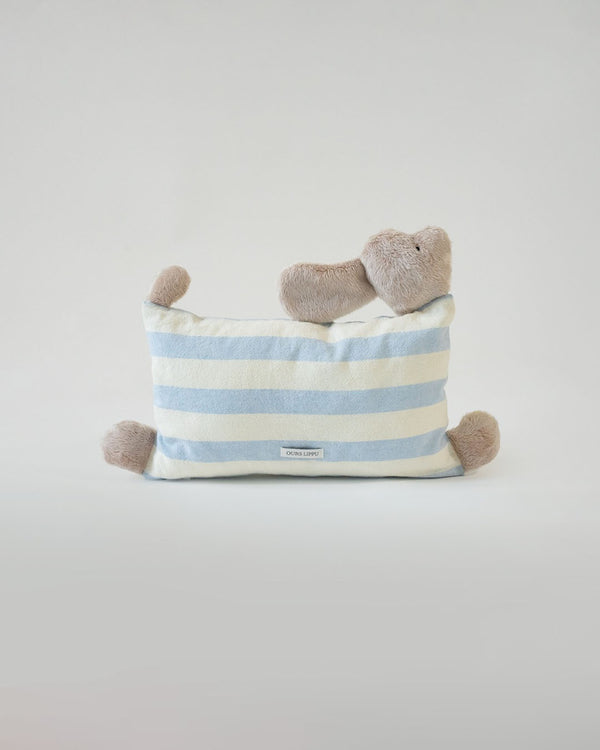
- Bring the bed, not a new bed. The blanket or cushion they slept on all week carries their scent, which is the whole point.1 For a dog, something small and soft that lives in their bed at home packs easily and goes straight onto the floor beside your bed.
- For cats, the carrier stays in the room, door open. It is the one familiar enclosed space in the building. Add a soft hideaway nearby and let them choose, ideally one that packs flat and has been in use at home for a week, so it arrives already smelling familiar. Set up the litter box before you let them out, in a quiet corner, and leave it there for the whole stay.
- Keep the clock the same. Feed at the usual times from the bowls you brought, and keep the first evening quiet. Explore the neighborhood tomorrow.
- Check the room before the pet does. Cords, a gap behind the headboard, a balcony door, anything at nose height on the nightstand.


What to Pack
The list below is pulled from the AVMA and ASPCA travel checklists.31 Most of it fits in one bag that stays in the car for the whole trip.
A calm trip is mostly preparation: a carrier that is already familiar, a secure seat, a light meal early, and a corner at the other end that smells like home.
Frequently Asked Questions
Give a light meal three to four hours before you leave, and avoid feeding in a moving vehicle. On a long drive, offer small portions of food and water at stops rather than a full meal on the road.
Plan a stop about every two hours so your dog can stretch, relieve themselves, and drink. Keep the collar, tags, and leash on every time the door opens.
No. A car's interior can rise about 20 degrees Fahrenheit in 10 minutes and close to 30 degrees in 20 minutes, and cracking the windows makes no difference. If your pet cannot come inside with you, plan the stop differently.
Yes. Cats should ride confined in a carrier that is secured so it cannot slide. A loose cat can end up under the pedals or in the driver's lap, and in a collision an unrestrained animal can be thrown or crushed by an airbag.
Give it two weeks with the door open in a room your cat already uses, with a blanket from their bed inside and treats appearing in it now and then. Once they go in on their own, add a few short drives so the car is not new on travel day.
- American Veterinary Medical Association, Traveling with your dog or cat.
- American Veterinary Medical Association, Pet safety in vehicles.
- ASPCA, Travel Safety Tips.
- Cat Friendly Homes (American Association of Feline Practitioners), Five Cat Carrier Tips.
- VCA Animal Hospitals, Motion Sickness in Dogs.
- Merck Veterinary Manual, Motion Sickness in Dogs.