
Crinkle toys for dogs are easy to overlook. They're small, inexpensive, and quieter than the loud squeakers that get more attention. But for many dogs, they're the toy that quietly outlasts the rest of the toy bin, the one that gets carried from room to room.
Whether crinkle toys are right for your dog comes down to three questions: are they good for dogs, what age they suit, and when to give one. Below we walk through each, plus what is actually inside a crinkle toy, then share three picks from our dog crinkle toys collection.
Are Crinkle Toys Good for Dogs?
For most dogs, yes. Crinkle toys engage multiple senses at once: the soft texture of plush, the papery rustle inside, and the satisfying feedback of biting something that responds. The rustling also taps into something instinctive, similar to small movement in dry leaves, which is why even very domesticated dogs perk up when they hear it.
For indoor enrichment in apartments and shared homes, that's a useful kind of stimulation: high engagement at low volume. Here's how crinkle plush compares to other indoor dog toys:
| Toy Type | Stimulation | Noise | Gentle on Jaws |
|---|---|---|---|
| Crinkle Plush | High | Low | Yes |
| Loud Squeaker | High | High | Yes |
| Plain Plush | Low | None | Yes |
| Rubber Chew | Medium | None | Hard on jaws |
When crinkle toys aren't the right fit
Crinkle toys are best for gentle to moderate chewers. Heavy chewers can tear through the outer layer and reach the crinkle material inside, which becomes a swallowing risk. If your dog destroys a stuffed toy in under an hour, a rubber chew is safer. As with any plush toy, supervise play and replace any toy with tears in the outer layer.
What Is Inside a Crinkle Toy?
The sound comes from a thin sheet of crinkly film, usually a food-safe plastic like the lining of a snack bag, sewn between the outer fabric and the stuffing. Squeeze the toy and the film folds and springs back, which is the rustle your dog hears. There are no hard parts, no batteries, and nothing that needs to be loud to work.
The film itself is not toxic, but it is not meant to be swallowed. The same goes for stuffing. A dog that gets through the outer fabric and starts pulling at what is inside can end up with a blockage, which is the real risk with any plush toy. In practice the rule is simple: a crinkle toy is safe while the outside is intact.
Three things to look at before each play session
- Seams and corners. These open first. A loose thread is fine, a gap you can fit a fingertip into is not.
- Flat or crunchy spots. If one area has gone flat or the film feels broken up into small pieces, the toy has done its job. Retire it.
- Your dog's style. A dog that shakes and carries is a good match. A dog that pins the toy and works at one spot is telling you to supervise closely or switch to a rubber chew.
What Age Are Crinkle Toys Good For?
Crinkle toys work across every life stage, which is unusual for a single toy category. The way dogs interact with them just shifts as they age: sensory exploration as puppies, everyday play as adults, gentle stimulation as seniors.
Seniors score high because the soft, light form is easy on aging jaws and a gentle squeeze is enough to get a response. Puppies score slightly lower only because teething means closer supervision.
Puppies use crinkle toys to learn cause and effect: bite produces sound, sound produces interest. Choose smaller, soft versions without detachable parts, and never leave a teething puppy unsupervised. If you are setting up for a new puppy, our new dog checklist covers what else to have ready in month one.
The everyday rotation toy. Crinkle plush works for fetch, light tug, and casual shake-and-toss play. The crinkle layer keeps things engaging on the hundredth play session.
Older dogs lose interest in toys that demand a lot of effort. Crinkle toys reward gentle interaction: a soft squeeze produces a satisfying sound, no chasing required. Keep the toy light and the sessions short.
When Should You Give a Crinkle Toy?

Crinkle toys work best in transitional moments: the lull before dinner, the half hour after a walk when a dog is still a little keyed up, or rainy days when walks get cut short. Five to ten minutes of focused play during these windows usually settles a dog more than leaving the toy out continuously. On the days the walk does happen, our walk bag checklist covers the rest of the routine.
Rotation is the secret. Dogs habituate to constant stimuli quickly. Take a crinkle toy out of circulation for a few days, then bring it back, and the novelty resets along with your dog's interest. Avoid crinkle play right before bed, though. The repetitive sound can over-stimulate sensitive dogs.
Three Crinkle Toys, One for Every Dog
Curated from the Design for Pets dog crinkle toys collection.
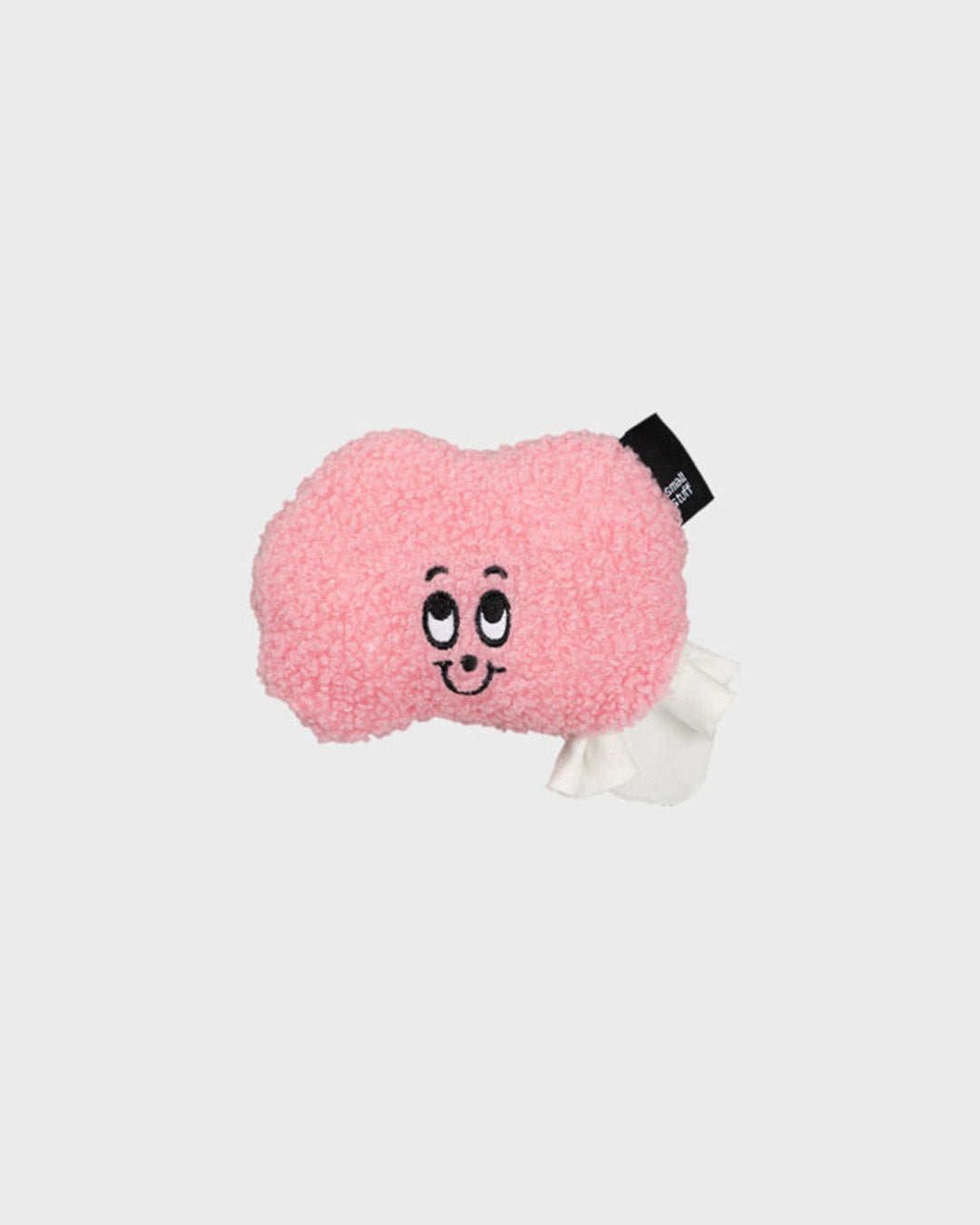
Ugly Toy Pink
For enrichmentA 100% cotton crinkle toy with 17 hidden pockets for tucking treats. The crinkle layer gives the bite its feedback, and the pockets turn a few minutes of play into foraging work, which suits puppies learning focus and seniors who do best with calmer engagement.
Shop now →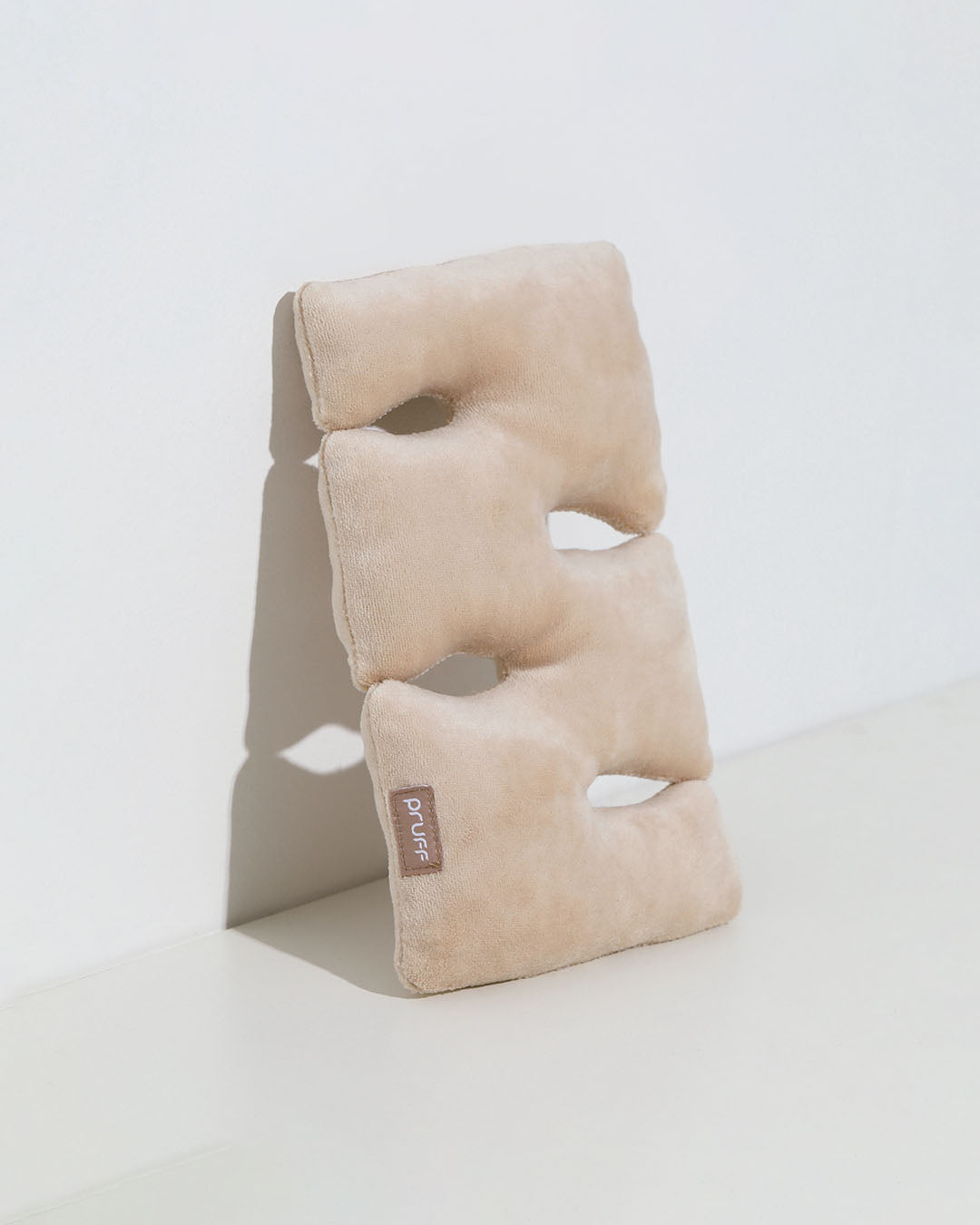
Puzzle Plush Toy with Squeaker and Crinkle
For dual-sound playA sculptural velvet toy with both crinkle and a squeaker inside for dual-sound play. Soft enough for gentle players, with a shape that is easy to grab and carry, and it does not look out of place when it is left on the floor.
Shop now →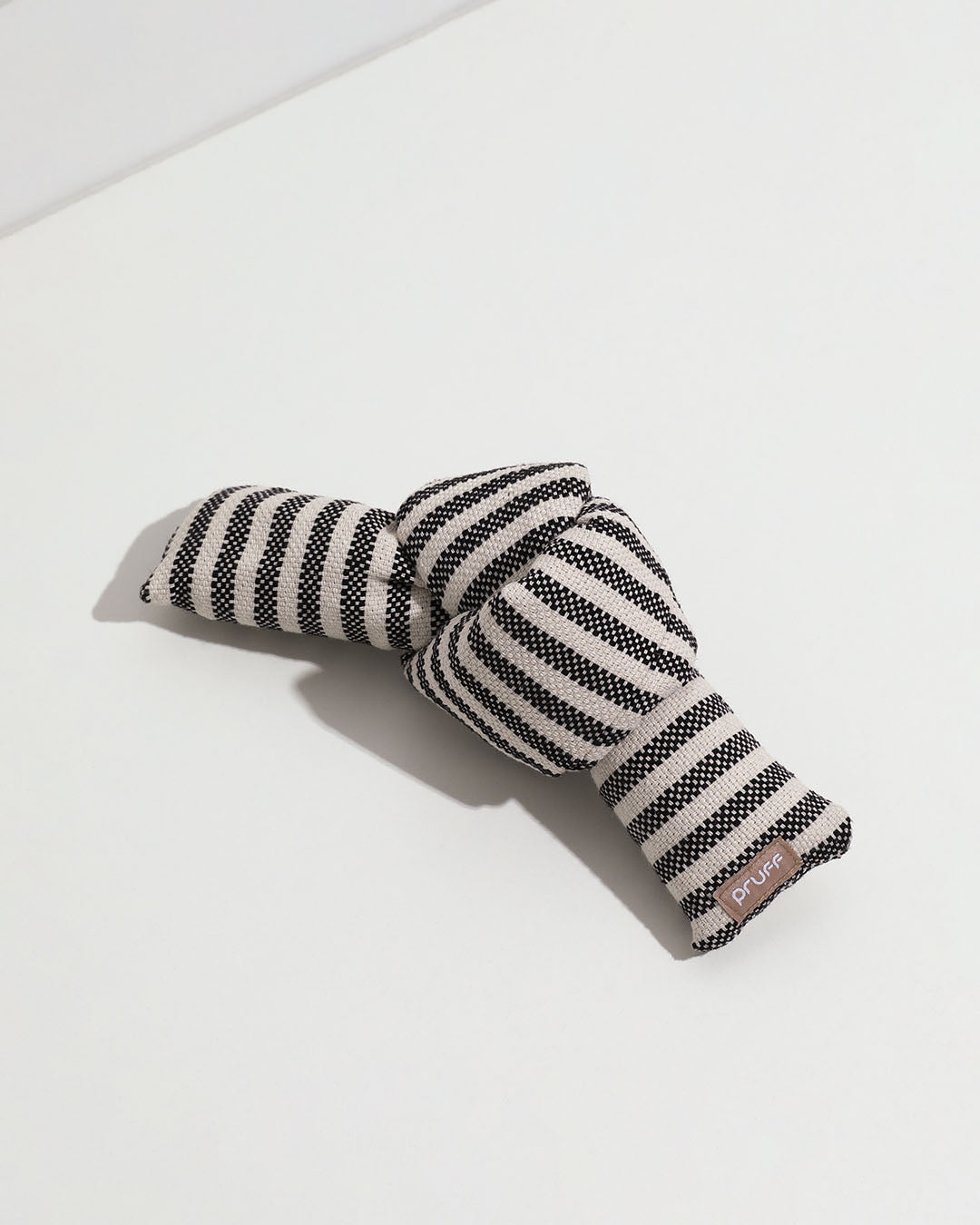
Knot Plush Toy with Crinkle
For everyday playA woven striped knot shape with crinkle inside. The textured loops give a satisfying bite, and the long, narrow form is easy for small and medium dogs to grab and carry. A solid all-around choice that often becomes a carry-around toy.
Shop now →A crinkle toy isn't the toy that gets photographed. It's the toy that gets used, and that's the metric that matters.
Frequently Asked Questions
It depends on your dog's chew style and how often the toy is used. With gentle players in a regular rotation, a quality crinkle toy can last six months to a year or longer. With moderate chewers, expect a few months. The crinkle layer softens slowly with use, but the outer fabric usually wears out first.
Generally yes. The crinkle produces a soft, papery rustle that is audible without being disruptive, closer to the sound of a plastic bag than a high-pitched squeak. This makes crinkle toys a better fit for apartments, open-plan homes, or households with sleeping kids or roommates.
Only if your dog has shown they are a gentle to moderate chewer with similar plush toys. Even then, regularly check the outer fabric for wear and replace the toy at the first sign of tearing. Heavy chewers and teething puppies should always be supervised.
The crinkle layer is usually a thin plastic film, similar to the material in a snack bag, sewn between layers of fabric. On its own it is not toxic, but it is not meant to be swallowed. Swallowed film or stuffing can cause a blockage, so the rule is simple: the toy is safe while the outer fabric is intact. Check seams and corners regularly and retire the toy at the first hole.
Crinkle toys focus on sensory and bite play through sound and texture. Nosework and snuffle toys focus on foraging: they have hidden pockets where you tuck treats, and your dog uses scent to find them. Some toys combine both, with a crinkle layer plus treat pockets, so you get sensory play and foraging in one.
Two to three is a good starting point. Rotation is what keeps crinkle toys interesting, so having a small set lets you swap one in and out every few days. Buying one toy and leaving it out continuously tends to lose your dog's interest faster than buying a few and rotating them.
Read more

Most pet products are designed to solve a function — not to live in a room. Here's how to choose dog products that actually look good in your home.

Living with a dog does not mean compromising on how your home feels. Five small details that make a dog-friendly home feel intentional — a collaboration with Heymat.