Flying with a pet is less about the flight and more about the month before it. The pets that travel calmly in the cabin are the ones whose carrier already felt like home, whose spot on the plane was booked before the humans' seats were chosen, and whose people knew exactly what would happen at security.
This is the second part of our travel series. The first covered car trips, from the carrier countdown to setting up the room at the other end, and the same ideas carry over here. This guide adds the parts that are specific to planes and public transit: the rules that decide whether your pet can come, what fits under a seat, and how to get through an airport without either of you panicking. One note before we start: every airline and transit system sets its own rules, and they change. We checked the sources listed at the end in November 2026, and you should check your airline's page for the flight you actually booked.5
Before You Book: Four Things to Confirm
In-cabin pet spots are limited per flight and handed out first come, first served, so the pet's booking comes before the seat selection, not after.1 Four things decide whether the trip is possible at all:
- Does this airline take pets in the cabin on this route? Most major US airlines do for small dogs and cats on domestic flights, but with exceptions by aircraft, cabin, and destination. Delta, American, and Alaska all require pets to be at least 8 weeks old for domestic travel.1, 2, 3
- How do you reserve the spot? This is where airlines differ most. Delta asks you to call Reservations after you book, with the carrier's length, width, and height ready.1 American lets you add a carry-on pet to the trip online under Additional Services, then pay at the ticket counter.2 Southwest and Alaska both require the pet reservation to be made ahead of the travel day, and Southwest only takes it by phone.3, 4
- What does it cost? Budget for a fee each way. At the time of writing, Delta and American charge $150 per carrier each way on domestic trips, and Alaska charges $100.1, 2, 3
- What paperwork does the destination want? For travel inside the US, the receiving state sets the requirements, not a single federal rule, and some airlines ask for a certified health record issued within 10 days of travel.5, 8 Ask your airline, check the destination state, and book the vet visit to land inside that 10 day window.
the most common soft-sided carrier guideline (Delta recommends it; American lists it as the soft-sided maximum)
minimum age for domestic in-cabin travel on Delta, American, Alaska, and Southwest
per passenger, under the seat in front of you, for the entire flight
The Carrier: Will It Fit Under the Seat?

The carrier is the whole trip. It has to fit under the seat in front of you, and your pet has to fit in it with room to move without touching the sides.1 The catch is that "under the seat" is not one size. Delta says the maximum depends on the aircraft and recommends 18 x 11 x 11 inches as the size that fits most of its planes.1 American uses the same 18 x 11 x 11 for soft-sided carriers on all flights, with smaller limits for hard-sided ones.2 Alaska is tighter at 17 x 11 x 9.5 for soft-sided.3 Soft-sided carriers are recommended across the board because they give a little when you slide them in.
| Airline | Soft-sided carrier | Fee, each way | How to book the pet |
|---|---|---|---|
| Delta | 18 × 11 × 11 in recommended; max depends on aircraft | $150 (US) | Call Reservations after booking, carrier dimensions in hand |
| American | 18 × 11 × 11 in max; hard-sided 19 × 13 × 9 (mainline) | $150 | Add carry-on pet online under Additional Services, pay at counter |
| Alaska | 17 × 11 × 9.5 in max; hard-sided 17 × 11 × 7.5 | $100 | Reserve before the day of travel |
| Southwest | Size list on its carrier page; up to 2 small pets of one species per carrier | Pet Fare, see current charges | Call to book; not available online |
Checked November 2026 against each airline's published policy (sources 1 to 4). Fees and sizes change; confirm on the airline's site for your flight. United and JetBlue publish their own limits on their sites.
Here is how our carriers measure against the 18 x 11 x 11 guideline. We would rather show you the numbers than put "airline approved" on everything, because the only approval that matters is the one at your gate.
Under on all three sides. At 2.3 lb with strap and cushion it is light enough to carry through a terminal.
L: 17.7 × 10.6 × 11.4 to 14.1 in
The top collapses from 13.3 to 10.2 in, which is how it slides under. The L is about half an inch over in height, so check your aircraft first.
One side is 0.8 in over the guideline on paper. Soft canvas gives, but ask about the aircraft before you count on it.
Measurements from each product page, ±0.4 to 0.5 in. Measure your pet too: they need to stand, turn, and lie down inside, and airlines can refuse a pet that looks cramped.
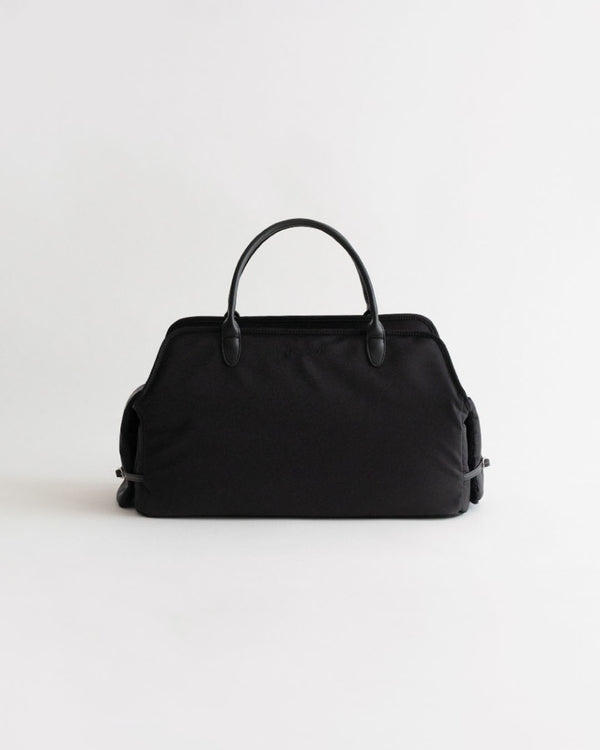


If you are choosing a carrier for the first time, our carrier comfort checklist covers ventilation, base, and fit in more detail. For a flight, add two things to that list: a mesh panel your pet can see out of while the carrier is on the floor, and a cushion you can lift out and replace with a pee pad.
The Three Weeks Before
The car trip guide used a two week countdown. A flight needs three, because the pet's booking and the vet visit have to happen in a particular order. Veterinary guidance is consistent on the rest: take time to get your pet used to the carrier, and do not reach for tranquilizers.7
Confirm the route takes pets, reserve the spot, note the carrier size limit for your aircraft.
Door open, their blanket inside, treats appear in it. Short carries around the house, then around the block.
Inside the 10 day window some airlines and states use. Ask about feeding timing and anything your pet needs.
A small meal a few hours before, water until you leave, a proper walk, then the carrier.
The short carries matter more than people expect. A pet who has only ever been in the carrier for vet visits learns that the carrier means something bad is coming. Two weeks of carrier rides that end at the park, or just back on the sofa, rewrite that.
Airport and Security

Security is the part first-time flyers worry about, and it is simpler than it sounds once you know the sequence. The TSA's own guidance is this: take your pet out of the carrier just before screening, put the empty carrier on the belt to be X-rayed, and carry your pet through the walk-through metal detector in your arms, or walk a dog through on a leash. Never put a pet through the X-ray tunnel. If your pet is skittish, you can ask an officer for screening in a private room.6
That means a harness and leash go on before you reach the line, even for a cat, because the carrier door will be open in a crowded room. Once you are through, the pet goes back in and stays in: airlines expect pets to remain in the carrier throughout the airport, not just on the plane.1 Most larger airports have pet relief areas past security, so look up where they are before you fly rather than when you need one.6
Plan on traveling light. On Alaska the carrier counts toward your carry-on allowance, and on American you get one more item with it, a personal item or a carry-on bag but not both.2, 3 A small backpack with the pet's things and yours is usually the right call.
On the Plane
The rule on board is the same everywhere: the carrier goes under the seat in front of you and the pet stays inside it for the whole flight.2 Taking a pet out, even onto your lap, can cost you the ability to fly with them again.1 So the goal is a pet who is comfortable enough in there to sleep, which is what the three weeks of practice were for.
- Choose the seat with the carrier in mind. Bulkhead rows have no seat in front of you, so on most airlines they are off limits with a pet. A window seat keeps the carrier out of the aisle and gives your pet a wall on one side.
- Feed early, not on board. The AVMA suggests asking your vet about feeding before, during, and after a flight.7 For most pets that means a light meal a few hours before and water, not food, during the trip. A collapsible bowl and a few ice cubes handle water without spills.
- Skip the sedatives. The AVMA's position is that tranquilizers are not recommended for air travel unless your vet has weighed the risks for your pet specifically.7 A familiar blanket and a chew or lick toy that keeps them busy during takeoff do more good.
- Pee pad under the cushion, spare in the bag. Accidents happen on long flights. Lining the carrier means you can swap the pad in the lavatory rather than sit with it.
- Keep their photo and health details on your phone. The AVMA recommends carrying them for identification, and it saves time if anyone at the gate asks.7
Trains, Buses, and Subways
Ground transit is easier than flying in one way (no booking fee, no aircraft-specific size chart) and stricter in another: the carrier has to be closed, and on most systems that is the entire rule. New York's MTA allows pets on subways and buses as long as they are in a bag or other container and carried so they do not bother other riders, and the Long Island Rail Road adds that the container has to fit on your lap.10 LA Metro requires pets to be secured in enclosed carriers that do not block an aisle or door.11 The same soft-sided carrier that works under a plane seat works here, and the mesh top matters even more when your pet is at knee height in a crowd.
Amtrak is the exception that behaves more like an airline. Pets ride on most routes on trips up to 7 hours total, with a 20 pound limit for pet and carrier combined, a carrier no larger than 19 x 14 x 10.5 inches, one pet per customer, and a reservation made in advance. The carrier goes under your own seat rather than the one in front.9 Off-peak trains and buses are kinder for a first trip, for the same reason an early flight is: fewer people, more room on the floor.
What to Pack
Most of this fits in the backpack that rides with the carrier, and a lot of it is already in the walk bag you carry every day. The documents go in a pocket you can reach with one hand.
And when you land, the car trip guide takes over: the first hour in the new room is where the stay is decided.
A good flight with a pet is decided three weeks early: the spot booked, the carrier measured and already familiar, and a plan for the one moment at security when the door has to open.
Frequently Asked Questions
There is no single number, because the space depends on the aircraft. The most common guideline for a soft-sided carrier is 18 x 11 x 11 inches, which Delta recommends and American lists as its soft-sided maximum. Alaska's soft-sided limit is 17 x 11 x 9.5 inches. Check your airline's current page for the flight you booked.
It depends on the airline. Alaska counts the pet carrier toward your carry-on allowance. American lets you bring one more item with the carrier, either a personal item or a carry-on bag, but not both. Delta allows one personal item or one carry-on in addition to the kennel. Plan to travel light either way.
The AVMA recommends against tranquilizers for air travel unless your veterinarian has weighed the risks for your specific pet. The safer route is preparation: a carrier that already feels familiar, a light meal a few hours before, and a calm, early arrival at the airport.
Usually yes, in a closed carrier. New York's MTA requires pets to be in a bag or container on subways and buses, and LA Metro requires enclosed carriers. Amtrak allows one pet per customer on trips up to 7 hours, with a 20 pound combined limit for pet and carrier and a reservation made ahead of time.
Requirements are set by the state you are flying into and by the airline, not by one federal rule. Some airlines ask for a certified health record issued within 10 days of travel. Ask your airline and check the destination state's animal health office before you book the vet appointment.
- 1Delta Air Lines, Pet Travel Overview.
- 2American Airlines, Traveling with Pets.
- 3Alaska Airlines, Pets in the Cabin.
- 4Southwest Airlines, Pet Policy.
- 5US Department of Transportation, Flying with a Pet.
- 6Transportation Security Administration, TSA Tips for Traveling with Pets Through the Security Checkpoint.
- 7American Veterinary Medical Association, Traveling with Your Pet (client brochure, PDF).
- 8USDA APHIS, Take a Pet From One U.S. State or Territory to Another.
- 9Amtrak, Pets on Amtrak.
- 10MTA New York, Pets on Public Transit.
- 11LA Metro, How to Ride Metro Rail.