
If you live with a cat, you have probably found a hair tie somewhere it should not be. In our house, the cat would find them no matter where they were hidden, and the ones that went missing always turned up in the same places: under the bed, or in the gap under the fridge, along with every other corner a paw can reach. You buy a pack of fifty and somehow there are never any on the counter. And the cat toys you actually paid for sit untouched.
So why do cats love hair ties? The short answer is that a hair tie is an almost perfect toy by cat standards, and the long answer is below. But there is a catch that is worth knowing before you shrug and let them have it: a hair tie is exactly the kind of thing veterinarians end up removing from a cat's stomach in surgery.3 This guide covers why your cat wants it, why it matters, and what gives them the same fun without the surgery.
Why Cats Love Hair Ties
Nobody has run a study on hair ties specifically, but the pull makes sense once you look at what a hair tie does in a cat's paws. Cats chew and bat at objects as part of exploring and playing, especially when they are young, and a hair tie rewards that better than almost anything else in the house.1
Flick it and it skitters. Bat it and it flips. It bounces off furniture in a direction the cat did not predict, which is exactly what a mouse does.
Light enough to carry, small enough to hide. Carrying a "catch" to a safe spot is part of the hunting sequence, and a hair tie is the right size for it.
A tie that spent the day in your hair carries your scent. Nobody has tested this, but it may be why a used one beats an identical one straight from the pack.
Add the elastic texture, which gives a little under the teeth, and you have a toy that moves, carries, smells right, and is satisfying to chew. The store-bought mouse never stood a chance.
The Part That Is Not Cute: Swallowing
Here is the problem with that last point. Chewing turns into swallowing more often than owners expect, and a hair tie is the wrong shape and material to swallow. Veterinarians list rubber bands among the things cats most commonly swallow, alongside thread, wool, and small toys.2 A hair tie is the same idea with more bulk, and it is not something a stomach can digest. A single tie may pass. But cats that eat hair ties tend to do it again, and the ties collect in the stomach until there are enough to cause a blockage.
This is not a rare, freak event. A veterinary case report describes a four-year-old cat who vomited ten times overnight; X-rays showed her stomach full of "long thin strips," and surgery removed at least fifteen hair ties plus floss and string that had built up over months without anyone noticing them go missing.3
Once there is a blockage, time matters. Blocked intestine can lose its blood supply, and strings and similar objects can perforate the gut wall, which leads quickly to a serious abdominal infection.2, 4 The good news is that the outlook after foreign body surgery is generally good when it happens early.4 The whole thing hinges on noticing.
Signs Your Cat May Have Eaten One
Cats are good at hiding discomfort, so the first signs are usually about food and the litter box rather than obvious pain. If you see any of the following and hair ties have been disappearing, call your vet the same day.2
Watch for
- Repeated vomiting, especially vomiting when the stomach should already be empty.
- Refusing food or eating much less than usual.
- Lethargy, hiding, or a cat that does not want to be picked up.
- A tender belly: flinching or growling when the abdomen is touched.
- Straining in the litter box, diarrhea, or very small amounts of stool.
- You saw it happen, or a tie is clearly missing from where it was a minute ago. Do not wait for symptoms.
Two things not to do: do not give anything at home to make your cat vomit (that is your vet's call), and do not pull on anything hanging from the mouth or the other end, since pulling on a string in a cat with a blockage is likely to damage the intestine further.7 Diagnosis usually starts with X-rays, sometimes with ultrasound added, and treatment is either retrieval with an endoscope if the object is still in the stomach, or surgery if it has moved on.4
Playing With It vs Eating It
There is a difference between a cat who bats a hair tie around and loses interest, and a cat who seeks out elastic, fabric, or string to chew and swallow. The second pattern is called pica. Wool and fabric sucking is seen most often in Siamese, Burmese, and Oriental mixes, but any cat can do it, and for some the urge is strong enough that vets compare it to a compulsive disorder.1
If your cat is in the second group, the hair ties are the symptom, not the problem. Mention it to your vet, since some chewing and sucking has medical causes that should be ruled out first, and then work on the environment: more play, more things to legitimately chew, and the targets put away.1 Our guide to what boredom looks like in indoor cats covers the enrichment side in more detail.
What to Give Them Instead

Taking the hair ties away and offering nothing is how you end up with a cat who finds them anyway. The better move is to look at what the hair tie was giving your cat and swap in something that does the same job without the elastic. Three things matter: it should move in a springy, unpredictable way, it should be small and light enough to carry in the mouth, and it should hold a scent worth caring about.
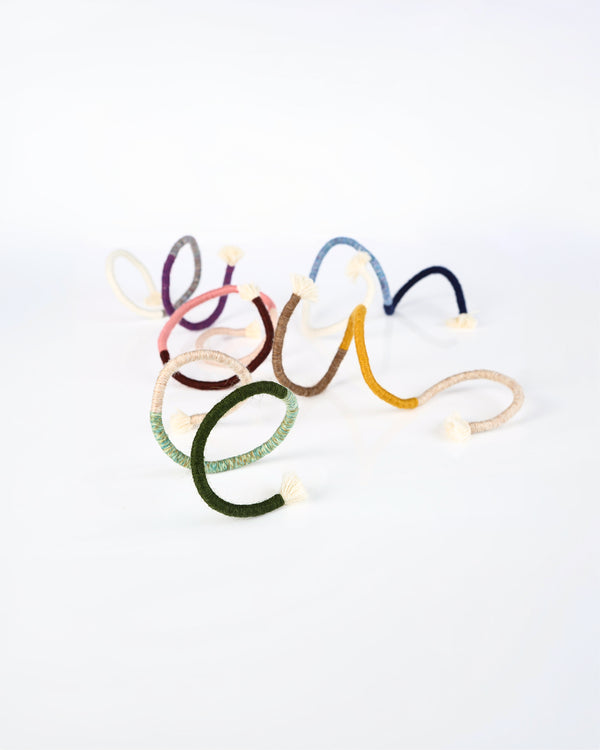
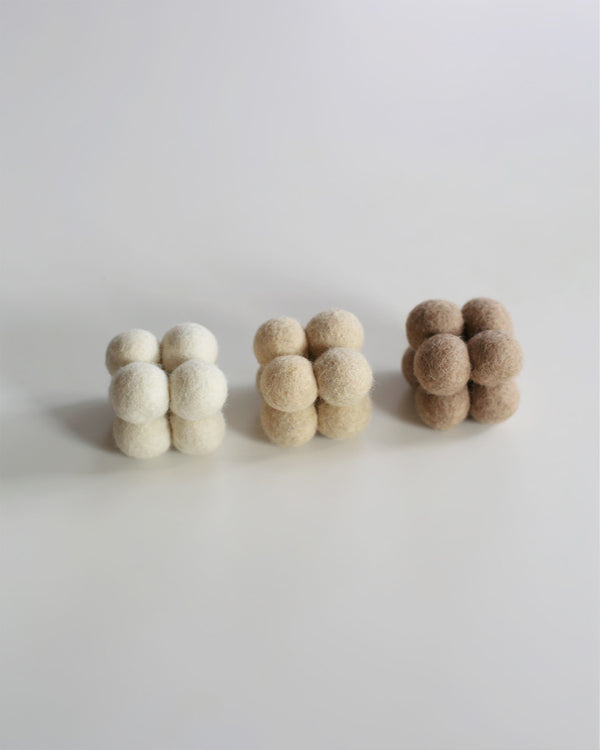
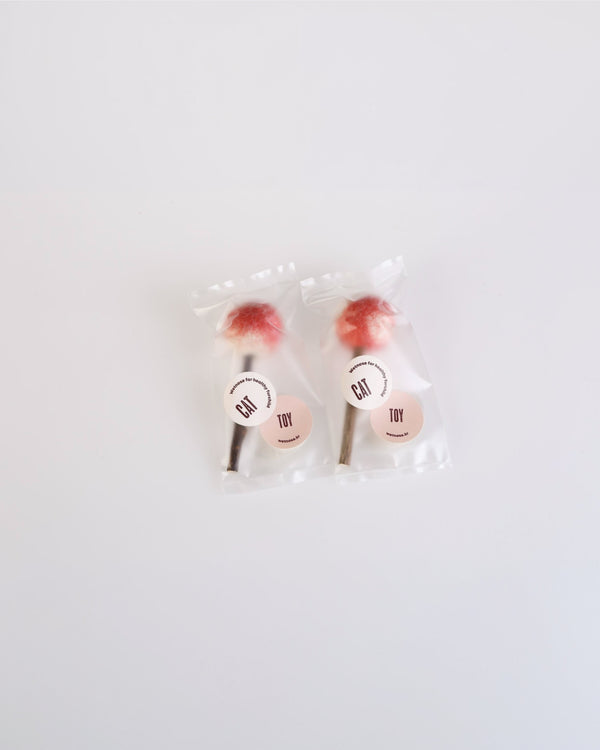
One honest note: a safer toy is not a chew-proof toy. Wool can fray, and a determined chewer can get pieces off anything. The rules below are what make the swap actually safer.
Hair-Tie-Proofing the House
The swap handles the want. This handles the supply. None of it is complicated, and most of it is just moving where things live.
Your cat is not wrong to love the hair tie. It moves, it carries, it smells like you. Give them a toy that does the same three things, and keep the elastic in a drawer.
Frequently Asked Questions
Because it checks every box a cat has for a toy: it is light enough to send flying with one paw, it bounces unpredictably, it fits in the mouth to carry off, and it carries the scent of the person who wears it. A store-bought mouse usually manages one or two of those, not all four.
Sometimes a single one passes, but there is no way to know in advance, and cats that eat hair ties tend to eat more than one. They collect in the stomach and can cause a blockage. If you think your cat has swallowed one, call your vet rather than waiting to see.
Call your vet the same day, even if your cat seems fine. Do not give anything at home to make them vomit. Watch for vomiting, refusing food, lethargy, a tender belly, or straining in the litter box, and treat any of those as urgent.
Wool toys are a safer swap than elastic, but no toy is chew-proof. Supervise a new toy the first few times, check for fraying, and retire anything that is coming apart. Toys with strings or feathers should be put away after play.
- 1VCA Animal Hospitals (Horwitz & Landsberg, DACVB), Cat Behavior Problems: Chewing and Sucking.
- 2VCA Animal Hospitals, Ingestion of Foreign Bodies in Cats.
- 3The Drake Center for Veterinary Care (Dr. Heather Kovac), Dr. K's Case of the Month: All Tied Up.
- 4American College of Veterinary Surgeons, Gastrointestinal Foreign Bodies.
- 5Cornell Feline Health Center, Safe Toys and Gifts.
- 6VCA Animal Hospitals, Dos and Don'ts of Kitten Toys.
- 7CatWatch (Cornell University College of Veterinary Medicine, Feline Health Center), Where Did That Floss Go?.
Read more

A Thanksgiving gift guide from SUHU SUHU and Design for Pets: four pairings and eight thoughtful gifts that follow a cozy day at home.

Flying with your pet in the cabin? Carrier size limits by airline, booking and fees, what happens at security, and a packing list you can save.